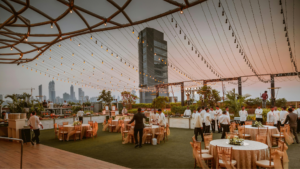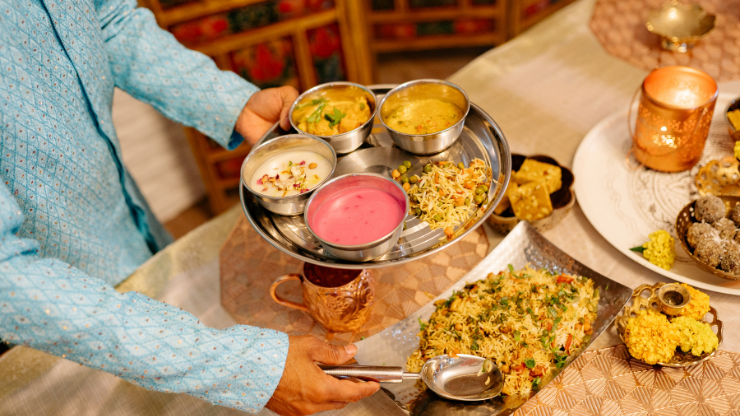
Travel is never just about the places you visit — it’s about the flavours that linger long after you’ve left. At Traaexplore, we believe the truest way to understand a culture is to eat as the locals do: seated on a plastic stool beside a smoky tawa, sipping chai in a centuries-old haveli courtyard, or sharing a banana-leaf thali with strangers who quickly become friends.
Every region of India is a civilisation unto itself, with its own language, rituals, and — most vividly — its own cuisine. The spice blend in a Chettinad chicken, the tanginess of a Kolkata puchka, the sweetness of a Mysore pak: each is a compressed history lesson, shaped by trade routes, royal kitchens, monsoon patterns, and religious tradition.
When you eat with intention and curiosity, you’re not just feeding yourself. You’re stepping into a living archive — one that no museum can replicate.
02
Iconic dishes to seek out on your next trip
India’s culinary map is staggering in its diversity. Here are six dishes that double as cultural experiences — each one anchored in a specific region and tradition.
🥘
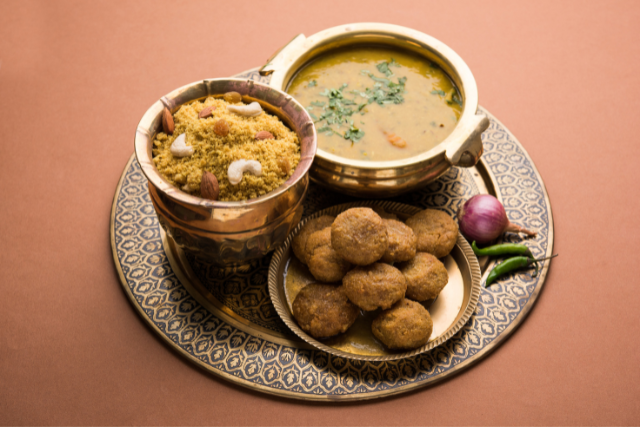
Dal Baati Churma
Rajasthan’s warrior food — baked wheat dumplings with five-lentil dal and crumbled sweet churma.
Rajasthan
🐟
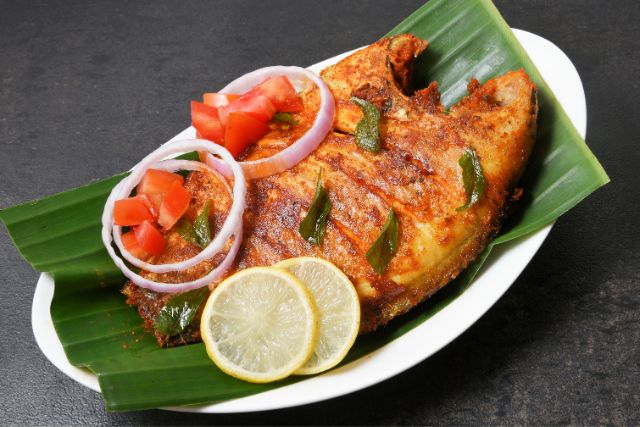
Karimeen Pollichathu
Pearl spot fish wrapped in banana leaf and pan-roasted — a ceremony in flavour from Kerala’s backwaters.
Kerala
🍜
Thukpa
A warming Tibetan noodle broth that arrived in Ladakh and stayed, flavoured with local herbs and yak butter.
Ladakh
🥟
Puchka / Golgappa
Kolkata’s version is tamarind-sour and impossibly addictive. Always eaten standing. Always competed over.
Kolkata
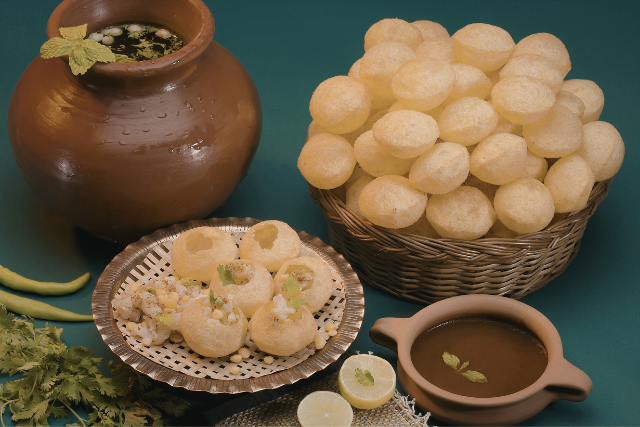
🫓
Saraswat Fish Curry
A coconut-rich, tangy curry from Goa’s Brahmin community — predating the Portuguese arrival by centuries.
Goa
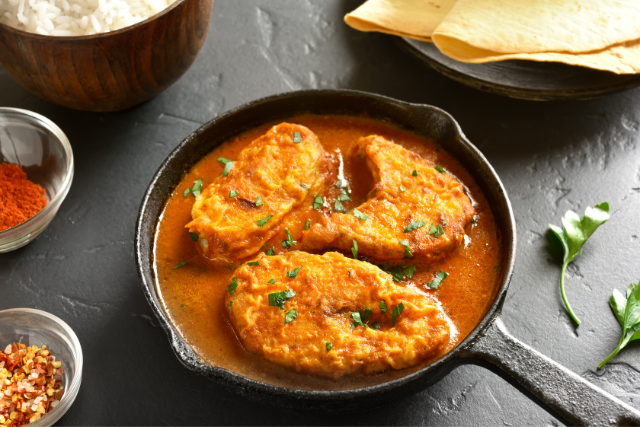
🍚
Hyderabadi Dum Biryani
Sealed in a deg and slow-cooked — every grain of rice carries the breath of saffron, rose water, and history.
Hyderabad
03
Festivals where food takes centre stage
Some of the most profound food experiences in India happen not in restaurants but during festivals — where cooking is communal, recipes are sacred, and sharing is a form of devotion.
January
Pongal — Tamil Nadu
A harvest festival where the community boils sweet rice in clay pots until it overflows — symbolising abundance.
March
Holi & Thandai
Beyond the colours, Holi is gujiyas and thandai — almond-spiked milk served in earthen cups across North India.
October
Navratri Fasting Feasts
Nine nights of “fasting” that somehow produce elaborate kuttu rotis, sabudana khichdi, and makhana curries.
November
Pushkar Camel Fair
Rajasthan’s legendary mela where bajra rotis cooked over open fires taste better than any restaurant meal.
04
How to eat like a local (not like a tourist)
The difference between a food tour and a food experience is intention. Here’s how TraaExplore’s travellers get it right:
- Skip TripAdvisor’s top 10 and ask your hotel’s housekeeper, your auto driver, or the person selling marigolds where they eat lunch.
- Eat at the busiest stall, not the cleanest-looking one. A crowd of locals is the only hygiene certificate that matters in street food.
- Order the regional special, not the “safe” option. The chef’s pride is always in the dish that’s hardest to pronounce.
- Visit a morning market before the day begins. Watching ingredients being bought, bartered, and tasted is food culture in its rawest form.
- Accept every invitation to someone’s kitchen. No restaurant will ever replicate the flavour of a home-cooked meal made for a guest.
Ready to eat your way across India?
TraaExplore curates food-first journeys that go beyond sightseeing.