TraaExplore Food & Culture Series | Mexico Edition
Walk into any Mexican kitchen — whether it’s a tiny street stall in Oaxaca or a grandmother’s home in Puebla — and you’ll notice something straight away. It smells alive. Chillies drying on a string. Corn masa being pressed by hand. A pot of beans that’s been going since morning. This is not food that came from a packet. This is food that came from the ground, and the people who grew it know exactly how.
Mexico doesn’t just have a food culture. It has one of the oldest and most complete food cultures on the planet. The way Mexicans grow, cook, and eat is so deeply tied to who they are that UNESCO put it on the list of Intangible Cultural Heritage of Humanity. Not a single dish. The entire food culture. That’s how serious this is.
It All Starts With Corn
Everything in Mexican food begins with corn. Not the corn you boil and eat off the cob — though that exists too — but corn as a way of life. Mexico is where corn was first cultivated, roughly 9,000 years ago, in the valleys of what is now the state of Guerrero. The people who grew it didn’t just eat it. They built their civilisations around it.
Today, Mexico grows over 60 varieties of native corn — yellow, blue, red, white, purple, even black. Each region grows what works in its soil and altitude. Farmers in the mountains grow a different corn than farmers near the coast. And each variety tastes different, behaves differently when ground, and makes tortillas with a slightly different texture and flavour.
The process of turning corn into food is called nixtamalisation — and it’s one of the greatest food discoveries in human history. Dried corn kernels are soaked and cooked in water mixed with calcium hydroxide (basically, lime — the mineral, not the fruit). This loosens the outer skin, unlocks nutrients that your body couldn’t otherwise absorb, and transforms the corn into something called masa — a soft, pliable dough that is the foundation of tortillas, tamales, tlayudas, gorditas, and about a hundred other things.
Without nixtamal, there is no Mexican food as we know it.
The Milpa: Mexico’s Original Garden
Long before anyone had heard of crop rotation or sustainable farming, Mexican farmers were doing something remarkable. They grew corn, beans, and squash together in the same plot of land — a system called the milpa.
Here’s why it works so beautifully. The corn grows tall and gives the bean plant something to climb. The beans pull nitrogen from the air and put it back into the soil, feeding the corn. The squash spreads low along the ground, blocking sunlight from reaching the weeds and keeping the soil moist. Three plants. One system. No chemicals needed. No fertiliser. The plants literally look after each other.
And when you eat them together — corn tortilla, black beans, squash cooked with herbs — you get a complete set of proteins and nutrients. The farmers figured out the nutrition long before scientists did.
This is what Mexican food actually is at its heart: not just recipes, but a relationship between people and land that has been refined over thousands of years.
Chillies: Not Just Heat
Most people outside Mexico think chillies are just about making food spicy. Mexican cooks find this a little sad.
Mexico is home to over 200 varieties of chilli, and heat is just one small part of what they bring to a dish. A dried ancho chilli tastes like dark chocolate and dried plum. A chipotle (which is just a smoked jalapeño) brings a deep, smoky warmth. A fresh poblano is mild and almost grassy. A tiny chile de agua from Oaxaca is fruity and bright.
Mexican cooks use different chillies the way a painter uses colours — layering them to create complexity. A good mole sauce can have five or six different chillies in it, each one doing something different. None of them are there just to burn your mouth.
The chillies are grown across the country. Farmers in Oaxaca grow different varieties than farmers in Yucatán or Jalisco. The soil, the rain, the altitude — all of it changes the flavour. A chilli grown in one valley will taste different from the same variety grown two valleys over. Mexican farmers know this and are proud of it.
The Food Changes Every Few Hours Down the Road
One of the most surprising things about Mexican food — for someone visiting for the first time — is how fast it changes as you travel.
Drive two hours from Mexico City and you’re in Puebla, where the food is richer and more complex, famous for mole poblano (a thick, dark sauce made with chillies, chocolate, and over 20 other ingredients) and chiles en nogada (stuffed peppers in a walnut cream sauce, topped with pomegranate seeds — it’s also the colours of the Mexican flag).
Drive south and you hit Oaxaca, where food is smokier and earthier. They char everything on a comal — a flat griddle — until it’s slightly blackened, and that char is the flavour. Tlayudas here are like giant crispy tortillas loaded with black bean paste, string cheese, and whatever else is in season. The local black beans taste different from beans you’ll eat anywhere else. The soil in Oaxaca does something to them.
Head east to the Yucatán and the food shifts completely — lighter, more citrus-forward, influenced by the Mayan civilisation that thrived here. Achiote (a red seed paste) colours and flavours almost everything. Cochinita pibil — slow-cooked pork marinated in achiote and bitter orange, wrapped in banana leaves and cooked underground — is one of the great dishes of the world.
Go north to Sonora and suddenly you’re eating massive flour tortillas (wheat grows better than corn in the desert) and incredible grilled beef. The north is cattle country, and it eats like it.
This is not one cuisine. It’s many cuisines sharing a family name.
Street Food Is Where the Real Action Is
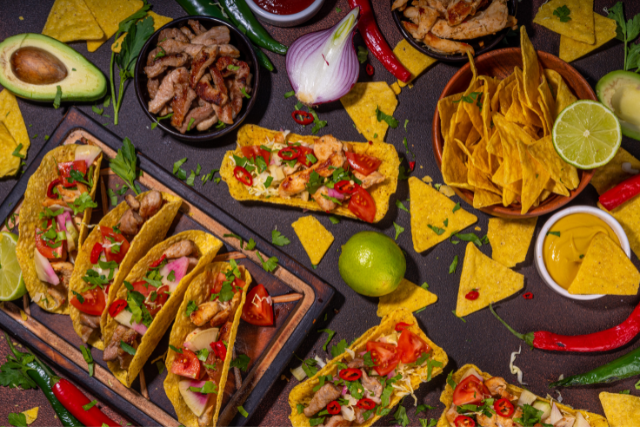
In Mexico, the best food is almost never in a formal restaurant. It’s at a taco stand that opens at 10pm and closes at 3am. It’s a woman with a cart selling elotes — corn on the cob slathered in mayonnaise, cheese, chilli powder, and lime. It’s a guy with a comal and a bucket of masa making fresh quesadillas to order on a street corner in Mexico City.
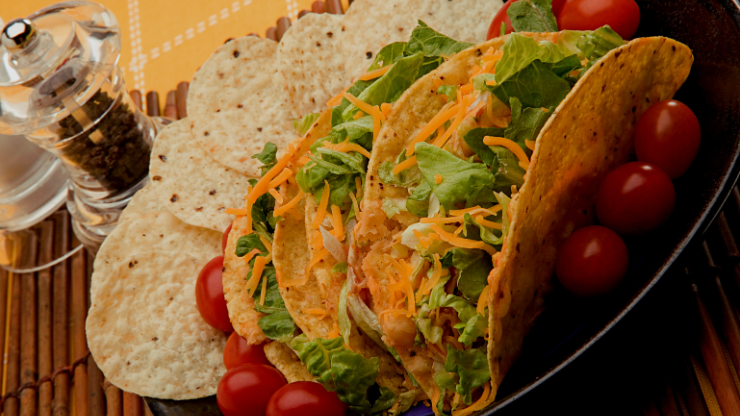
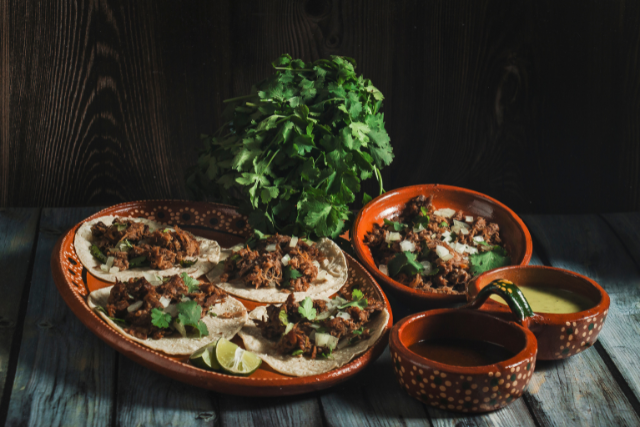
The taco alone could fill a book. Tacos al pastor — thin slices of marinated pork shaved from a rotating spit, topped with pineapple — arrived with Lebanese immigrants in the early 20th century and became so Mexican that most people forget its origins. Tacos de canasta are steamed soft tacos carried around in a basket by bicycle vendors. Tacos de carnitas are slow-cooked pork, crispy on the outside, soft inside, wrapped in a warm corn tortilla with nothing but onion, coriander, and salsa.
The salsa matters enormously. A taco stand will offer three or four different salsas — green tomatillo, red dried chilli, smoky chipotle, fresh pico de gallo — and the right choice changes the entire experience. Mexicans take this decision seriously. As they should.
The People Behind the Food
It’s worth saying clearly: Mexican food did not come from chefs. It came from women. Indigenous women, specifically, who developed these techniques over thousands of years and passed them from mother to daughter, generation to generation, without writing any of it down.
The knowledge of how to make a proper mole — which can take three days — lives in hands and memory. The way to press a tortilla to exactly the right thickness. How to know when the nixtamal is ready just by feeling it. How to balance a sauce that has gone too bitter or too sweet. This is not recipe-card knowledge. This is a lifetime of learning.
When you eat in someone’s home in Mexico, or at a small family-run comedor, you are eating that accumulated knowledge. It deserves its respect.
What to Eat and Where to Find It
If you’re travelling with TraaExplore through Mexico, here’s a simple guide to eating like you mean it:
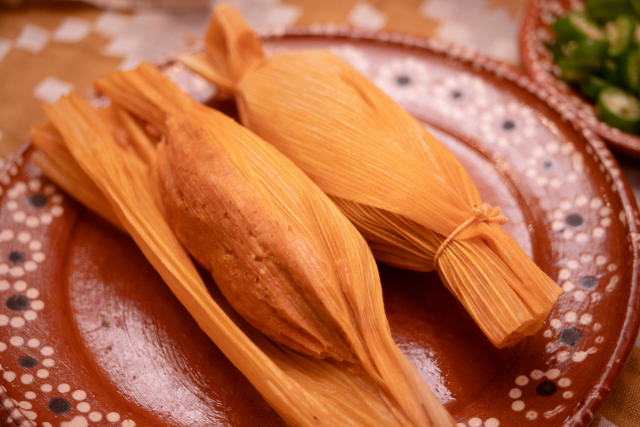
In Mexico City: Go to the Mercado de la Merced or Mercado Medellín early in the morning. Eat breakfast at a market stall — chilaquiles (fried tortilla pieces soaked in salsa, topped with egg and cream) or tamales with atole (a warm, thick corn drink). Walk until something smells good, then stop.
In Oaxaca: Find a tlayuda, order a mezcal (the local spirit, smoky and complex, made from agave), and eat mole negro on anything you can. Visit the Mercado Benito Juárez and try the chapulines — toasted grasshoppers seasoned with chilli and lime. They taste better than you think.
In the Yucatán: Eat cochinita pibil for breakfast on a Sunday, which is when it’s traditionally served. Order agua de jamaica (hibiscus flower water) with everything. Try a marquesita — a thin crispy crepe rolled with cheese and your choice of sweet filling, eaten hot off the iron.
In Puebla: Order a mole poblano if a restaurant has been making it for at least a generation. Ask how long they’ve been open. If the answer is less than twenty years, keep walking.
One Last Thing
Mexican food is generous. It always has been. The tradition of feeding people well — a lot of people, regardless of occasion — is built into the culture. A wedding, a funeral, a Sunday, a random Tuesday: the table is set, the food is made, and everyone sits down together.
That generosity is the thing that stays with you after you leave. The flavours fade a little with time. The memory of sitting around a table with strangers who quickly became familiar — that part doesn’t.
Go hungry. Go curious. Go with time to sit still for a while.
— TraaExplore Editorial | food-first journeys for curious travellers